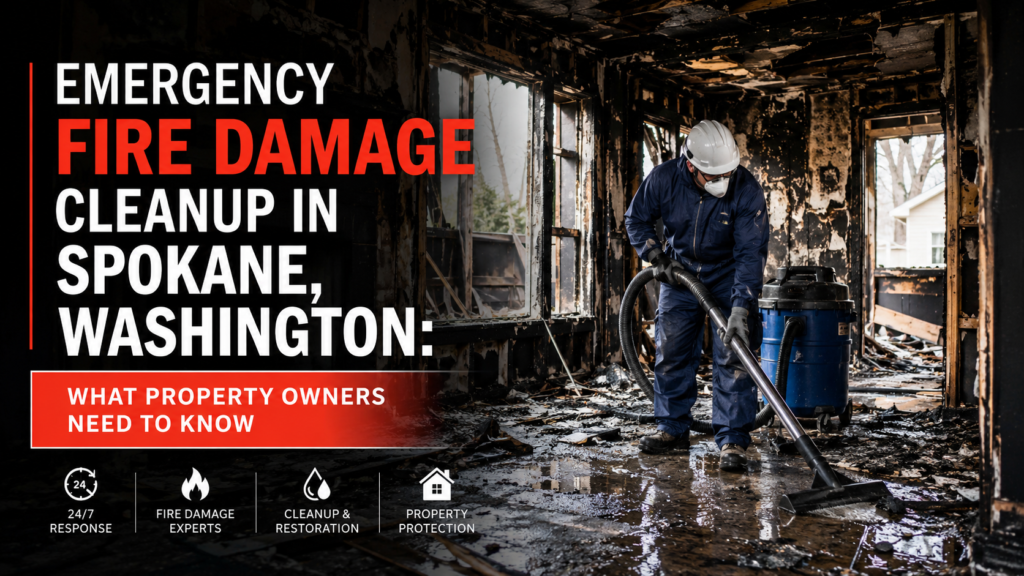
Spokane sits at the eastern edge of Washington State, a city with a rich history, a diverse economy, and a surrounding landscape that includes both urban neighborhoods and the wildfire-prone dry forests and grasslands of Eastern Washington. When fire strikes a Spokane property whether a house fire ignited by an electrical fault, a kitchen fire in an apartment building, or a wildfire that damages rural or suburban structures on the urban fringe the immediate aftermath is one of the most challenging and emotionally overwhelming situations a property owner can face. The structure may be partially or fully destroyed. The smoke and soot permeate every surface. Firefighting water saturates and compounds the damage. And in the chaos of the first hours and days, property owners must make consequential decisions about emergency cleanup, structural stabilization, insurance documentation, and the path to recovery.
Emergency Fire Damage Cleanup Spokane is not a single service but a multi-phase response that spans immediate emergency actions, hazardous material assessment, structural demolition and debris removal, and site preparation for eventual rebuilding. Understanding what this process involves and what the regulatory requirements, insurance processes, and professional services look like in Spokane specifically helps property owners navigate one of the most difficult situations they may ever encounter.
Immediate Actions in the First Hours After a Fire
Safety is the absolute first priority in the immediate aftermath of a structure fire. Before anyone re-enters a fire-damaged building, the structure must be cleared by the fire department as safe for entry. Spokane Fire Department and, for properties outside city limits, Spokane County Fire District personnel will determine when the fire is fully extinguished and whether the structure is stable enough for limited access. Never re-enter a fire-damaged building without this clearance post-fire structures can have compromised structural integrity that is not obvious from the exterior, and hot spots within walls and ceilings can reignite hours after the apparent fire is out.
Contact your insurance company immediately. The sooner your insurer is notified, the sooner the claims process can begin. Most homeowner and commercial property insurance policies have specific notification requirements, and prompt reporting is essential. Before any cleanup or removal begins, document the damage thoroughly with photographs and video. Walk through every accessible area of the structure, photograph every room and every damaged surface, and record the condition of all personal property and structural elements before any debris is moved or surfaces are disturbed. This photographic documentation is the foundation of your insurance claim.
Ask your insurer whether they need to inspect the site before cleanup activities begin. Some insurers require their adjuster to inspect the site in its post-fire condition before any debris removal or cleanup is performed, to document the damage for claim purposes. Allowing cleanup to proceed before the insurance inspection can create disputes about the scope of covered damage. Once you have confirmed the insurer’s requirements, you can begin organizing the professional services needed for cleanup.
Contact a Spokane emergency board-up and tarping service if the fire has opened the structure to weather. Spokane’s climate with its cold winters, precipitation, and occasional high winds means that a fire-damaged structure with open roof areas or wall openings can sustain significant secondary water and weather damage within hours or days. Emergency board-up services secure openings with plywood to prevent unauthorized access and protect the structure from weather pending more comprehensive assessment and cleanup.
Hazardous Materials: The Critical First Assessment Step
One of the most important and least intuitive aspects of fire damage cleanup in Spokane is the mandatory hazardous materials assessment that must precede any demolition or debris removal. Spokane’s housing stock like that of most American cities with significant pre-1990 construction contains a substantial proportion of structures built when asbestos-containing materials were commonly used in insulation, floor tile, ceiling tile, roofing, pipe wrapping, and many other building products.
Spokane County Building and Planning requires a Debris Removal/Demolition Permit before structural debris from a fire-damaged building can be cleared. Additionally, for homes built before the 1990s (a significant fraction of Spokane’s residential stock given the city’s historical development patterns), an AHERA-certified asbestos inspector must survey the structure before any demolition or debris removal begins. If regulated asbestos-containing materials are identified, a Notice of Intent (NOI) must be filed with the Spokane Regional Clean Air Agency before abatement work can proceed.
This asbestos assessment requirement cannot be skipped, even in emergency situations and even for small structures. The Spokane Regional Clean Air Agency enforces these requirements, and contractors who proceed with debris removal without the required asbestos survey and notification face significant regulatory penalties. More importantly, disturbing asbestos-containing materials without proper containment and handling creates serious health hazards for workers and adjacent property occupants.
Beyond asbestos, fire-damaged structures may present other hazardous conditions. Lead-based paint on older surfaces is disturbed during demolition and creates lead dust exposure hazards for workers. Everyday household chemicals cleaners, pesticides, fertilizers, propane tanks may have leaked or been damaged during the fire and fire response. The Spokane Regional Health District provides specific guidance on post-fire cleanup and handling of household chemicals that may have been compromised during a fire event.
What Fire Damage Cleanup Actually Involves
Fire damage cleanup is a multi-component process that addresses several distinct types of damage simultaneously. Understanding these components helps property owners understand the scope of professional services needed and the sequence in which they are performed.
Structural debris removal is the demolition and removal of the fire-damaged building materials that cannot be restored charred framing, collapsed roofing, burned flooring, and other structural elements that the fire has rendered irreparable. This is the most visible phase of the cleanup process, and it requires Spokane County’s debris removal/demolition permit, an asbestos survey and abatement if required, and a licensed contractor to perform the work safely and in compliance with local requirements. Material from fire debris is hauled to permitted disposal facilities in the Spokane area.
Soot and smoke residue removal is a specialized cleaning process that addresses the fine carbonaceous particles that fire distributes throughout every surface, crack, and pore of a fire-affected structure. Soot is not just dirty it is a complex mixture of partially combusted materials that is acidic, continues to chemically react with surfaces it contacts, and generates long-lasting odor. Professional smoke and soot removal uses specialized equipment and chemical cleaning agents to remove residue from walls, ceilings, HVAC systems, and contents. This work is typically performed by restoration specialists rather than general demolition contractors.
Moisture management is a critical component that property owners often underestimate. Firefighting water delivered at high pressure and in substantial volume saturates structural materials, contents, and the building envelope. In Spokane’s climate, saturated materials that are not promptly dried create ideal conditions for mold growth, which can begin within 24 to 48 hours of water exposure. Industrial dehumidifiers, air movers, and moisture monitoring equipment are used by restoration contractors to dry the structure before mold can establish. This drying process must be carefully managed too rapid drying can cause additional damage to some materials.
HVAC system inspection and cleaning addresses the ductwork and mechanical systems through which smoke particles have traveled throughout the building. Even in areas of a structure that were not directly involved in the fire, smoke infiltration through the HVAC system can deposit residue in ducts, on coils, and throughout the ventilation system. Running the HVAC system before it has been inspected and cleaned after a fire spreads soot residue through the entire building a significant secondary damage source.
Contents pack-out is the process of inventorying, removing, cleaning, and storing personal property off-site during the structural cleanup and restoration process. Personal belongings that can be restored furniture, clothing, documents, electronics, collectibles are transported to a specialized restoration facility where they are cleaned using appropriate techniques and stored pending the completion of structural restoration. This off-site process protects restored contents from additional damage during demolition and reconstruction and keeps the structural work site safer and better organized.
The Spokane Regulatory Process for Fire Debris Removal
Navigating Spokane’s regulatory requirements for fire debris removal can be one of the most significant delays in the cleanup process. Understanding the required steps helps property owners plan realistically and avoid costly mistakes.
Step one is the asbestos survey by an AHERA-certified inspector. This survey should be arranged as soon as the site is accessible and safe for inspector entry. The survey typically takes one to two days for a standard residential structure, plus laboratory analysis time for any suspect samples, which adds three to five business days.
If regulated asbestos-containing materials are found, step two is the Notice of Intent (NOI) filing with the Spokane Regional Clean Air Agency, which requires a mandatory waiting period before abatement work can begin. Washington State regulations require a ten-working-day waiting period after NOI filing before asbestos abatement can start, unless an emergency exception is granted by the agency. Emergency exceptions can be pursued when the damaged structure presents an imminent public safety hazard.
Step three is the demolition/debris removal permit from Spokane County Building and Planning. This permit is required before structural debris can be cleared and confirms that the planned work meets applicable codes and that the required asbestos assessment has been completed.
While this regulatory process can feel frustratingly slow when a property owner is eager to begin rebuilding, the requirements exist to protect both workers and the community from the real hazards that fire debris presents. Experienced Spokane fire damage cleanup contractors understand these requirements and can help property owners navigate them as efficiently as possible while maintaining compliance.
Insurance Coordination and the Cleanup Process
Most fire damage cleanup and debris removal costs are covered by homeowner’s or commercial property insurance under the dwelling coverage or commercial structure coverage provisions. The relationship between the insurance claim process and the cleanup timeline is one of the most important practical considerations for Spokane property owners.
Insurance adjusters will assess the damage to establish the covered loss amount. Providing the adjuster with your pre-cleanup photographic documentation and a written inventory of damaged items supports an accurate assessment. Some insurers use independent adjusters; others use staff adjusters. Understanding your policy’s provisions about additional living expenses (ALE) which cover temporary housing while a fire-damaged home is uninhabitable helps you plan financially for the weeks or months that cleanup and rebuilding may take.
Loss documentation is an ongoing process throughout cleanup. Keep receipts and records for every cleanup-related expense emergency board-up, asbestos testing, temporary storage, contents restoration, and debris removal. These documented expenses support your insurance claim and ensure that covered costs are recovered from the insurer rather than borne out of pocket.
Why Professional Contractors Are Essential for Spokane Fire Damage Cleanup
Fire damage cleanup is not a project that can be safely or legally managed through DIY effort for anything beyond very minor, contained fire damage. The combination of structural instability hazards, asbestos and lead exposure risks, the specialized equipment and techniques required for effective smoke and soot removal, the regulatory compliance requirements around demolition permits and asbestos notifications, and the coordination complexity of a multi-phase restoration all require professional contractor expertise.
Contractors performing demolition and debris removal in Spokane must be licensed and insured under Washington State’s contractor registration requirements. Work involving asbestos requires licensed asbestos abatement contractors. Restoration work on fire-damaged structures is a specialized field with its own certifications, including IICRC (Institute of Inspection, Cleaning and Restoration Certification) credentials for fire and smoke damage restoration.
Choosing contractors with specific Spokane fire damage experience provides additional advantages. Local contractors understand the specific permit process with Spokane County Building and Planning, the NOI filing process with the Spokane Regional Clean Air Agency, the disposal infrastructure for fire debris in the Spokane area, and the local insurance adjuster community. This local familiarity can meaningfully accelerate the cleanup timeline and reduce the administrative burden on the property owner during an already overwhelming situation.
Frequently Asked Questions About Emergency Fire Damage Cleanup in Spokane
How long does fire damage cleanup take in Spokane? The timeline varies enormously depending on the extent of the fire damage, whether asbestos abatement is required (and its scope), and the efficiency of the regulatory permit process. For a partial fire loss without asbestos, the cleanup phase might take two to four weeks. For a total loss with asbestos abatement and the full permit/NOI process, the debris removal phase alone may take two to three months or more before rebuilding can begin.
Can I start cleaning up fire damage myself before the insurance adjuster arrives? You can take emergency measures boarding up openings, tarping the roof, removing obviously ruined personal belongings to prevent further damage after getting insurance company approval. However, you should not begin structural demolition or debris removal before the insurance adjuster has inspected the site and before obtaining the required demolition permit and asbestos survey. Premature cleanup can compromise your insurance claim and create regulatory violations.
What is the Spokane Regional Clean Air Agency and why is it involved in fire cleanup? The Spokane Regional Clean Air Agency (SRCAA) is the air quality authority for Spokane County. It enforces Washington State’s asbestos regulations because asbestos fibers released during demolition or debris removal become airborne and create both worker and community air quality hazards. The SRCAA requires the NOI filing and reviews compliance with asbestos abatement work to protect air quality in the Spokane region.
Will my homeowner’s insurance cover fire cleanup costs in Spokane? Yes, in most cases. Standard homeowner’s insurance policies include coverage for fire damage cleanup and debris removal as part of the dwelling coverage. Additional living expense coverage provides funds for temporary housing if the fire renders your home uninhabitable. Review your specific policy with your insurance agent to understand your coverage limits and any deductibles that apply.